
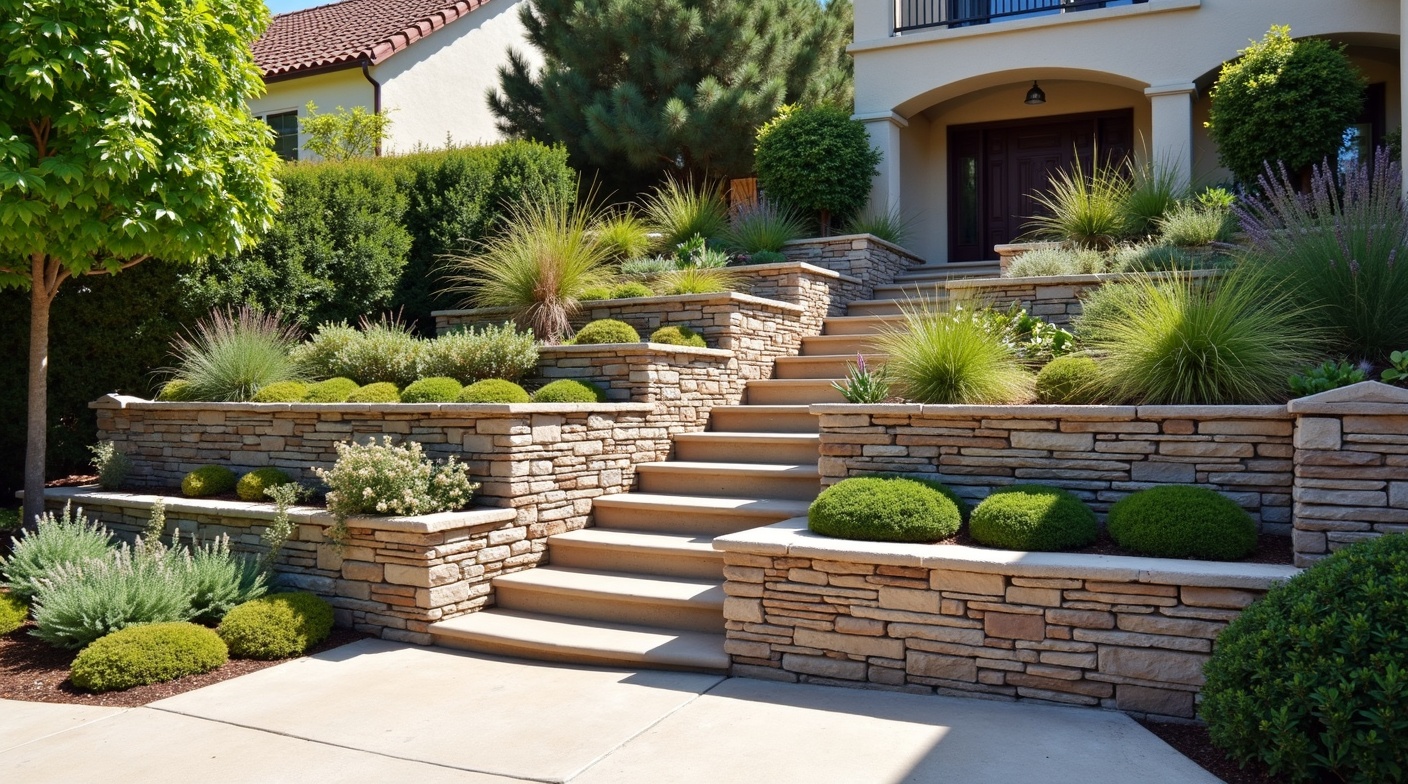
Retaining Walls • Chula Vista
Retaining Walls in Chula Vista
Stabilize slopes and add aesthetic appeal with our custom retaining walls in San Diego. Our team designs and builds durable, stylish walls that blend seamlessly with your landscape while providing real structural support.
★ 4.7 Google • Licensed & Insured #1149801 • Free Estimates
Get Your Free Estimate
No pressure. Free on-site design & estimate.
Quick Answer
Stabilize slopes and add aesthetic appeal with our custom retaining walls in San Diego. Our team designs and builds durable, stylish walls that blend seamlessly with your landscape while providing real structural support.
Overview
Retaining Walls Done Right
As a licensed and insured local design-build company serving Chula Vista and San Diego County since 2015, we handle your project from the first design sketch to the final walkthrough, from start to finish.
What’s Included
- Engineered for stability
- Block, stone & concrete
- Drainage built in
- Slope & erosion control
- Seat & planter walls
- Permits handled
The Basics
What Are Retaining Walls?
A retaining wall is an engineered structure built to hold back soil and resist the sideways pressure of a slope, keeping graded areas stable and level. It prevents erosion, creates usable flat space on hillside lots, and manages water runoff by combining a solid facing with a compacted base and a hidden drainage system behind it.
San Diego retaining walls get built from several proven material families, and the right one depends on wall height, soil, and look. Segmental block systems such as Versa-Lok, Allan Block, Keystone, and Belgard offer interlocking units that flex with ground movement and need no mortar. Poured concrete and CMU (concrete masonry units, the gray cinder blocks) deliver maximum strength for tall or engineered walls and accept stucco or stone veneer. Natural stone and boulders suit rustic gardens. Behind every facing we place drainage gravel and perforated pipe, plus geotextile fabric (a filter cloth that keeps soil from clogging the gravel). These brands are options we work with, not the only choice.
Our Process
How We Build Retaining Walls in Chula Vista
Site assessment and engineering
We measure the slope, check soil type, and determine whether the wall height triggers a permit or a structural engineer’s stamp, which San Diego typically requires above 3 to 4 feet.
Excavation and layout
The crew digs the wall line and a level trench for the footing, marking batter (the slight backward lean that adds stability) and setback from property lines.
Compacted base and footing
We install and compact a Class II aggregate base or pour a concrete footing with rebar, using a plate compactor to reach the density the wall needs to carry load.
First course leveling
The bottom course of block or the base of a poured wall is set dead level, since every course above depends on this row being true.
Building courses and reinforcement
Blocks are stacked and, on taller walls, tied back with geogrid (a soil reinforcement mesh) buried into the hillside, or steel and formwork are set for a poured pour.
Drainage installation
Drainage gravel, geotextile fabric, and a perforated pipe go in behind the wall so winter rainwater exits instead of building hydrostatic pressure that can topple it.
Backfill, cap, and cleanup
We backfill in compacted lifts, add cap units or a finished top, and grade the surrounding soil to direct runoff away from the structure.
Cost
How Much Do Retaining Walls Cost in Chula Vista?
In San Diego County, retaining walls generally run about $50 to $100 per face square foot (wall height times length) for segmental block, and roughly $80 to $260 per face square foot for poured concrete or CMU finished with stucco or stone veneer. Cost climbs with wall height, hillside access, and soil. Structural engineering can add $2,000 to $8,000, a geotechnical soils report $2,500 to $6,000 when required, and city permit fees $500 to $2,500. Every project starts with a free on-site estimate so you get numbers matched to your exact grade.
San Diego Specifics
Built for the San Diego Climate
San Diego sits in USDA zone 10a to 10b, with mild temperatures but real drainage demands during winter storms. Inland areas like El Cajon and Santee carry expansive clay soils that swell when wet and shrink when dry, pushing hard on walls, while coastal and mesa lots trend sandy or decomposed granite. Proper footing depth, compacted base, and a gravel drainage core behind the wall matter more here than freeze protection. On steep canyon lots in areas like La Jolla or Rancho Santa Fe, slope stability and setback rules drive the engineering, so soil testing is worth doing early.
Related Services
Complete the Project
Homeowners who take on this project often pair it with these.
How It Works
Four Steps. Zero Surprises.
Free Design Consultation
We visit your South Bay property, listen to how you want to use the space, and take measurements. No pressure, no charge.
Design & Written Estimate
You get a clear design concept and an itemized written estimate up front, so there are no surprises.
Built In-House
Our licensed, insured team builds your project on schedule and keeps the site clean.
Walkthrough & Enjoy
We walk the finished space with you and leave you with a yard built to last.
Why Choose Us
Why South Bay Homeowners Trust Us
Reviews
What South Bay Homeowners Say
Real 5-star reviews from homeowners across Chula Vista and the South Bay.
“These guys were amazing. Quick, thorough, and my yard looks amazing.”
“Absolutely outstanding. They were communicative, friendly, thorough, and professional. Most importantly, the quality of their work was outstanding.”
“Chula Vista Landscaping & Synthetic Turf did a fantastic job with our back and front yard turf replacement which was looking old and frayed.”
“Their team was great to work with and their attention to detail was incredible.”
“The backyard patio design they did looks amazing.”


Service Area
Serving Chula Vista & the South Bay
From Chula Vista across San Diego County. Don’t see your area? Call (619) 489-6305.
Frequently Asked
Retaining Walls in Chula Vista: FAQs
How much does a retaining wall cost in San Diego?
Most San Diego retaining walls run $50 to $100 per face square foot for segmental block like Allan Block or Keystone, and $80 to $260 for poured concrete or CMU with veneer. A short 40-foot garden wall often lands in the low thousands, while an engineered hillside wall in Poway or La Mesa can reach five figures once you add a soils report and permits.
Do I need a permit for a retaining wall in San Diego?
The City of San Diego and most county jurisdictions require a permit once a wall exceeds about 3 to 4 feet measured from the bottom of the footing, or any height if it retains a surcharge like a driveway or slope. Taller walls also need a structural engineer’s stamp. We handle plan submittal and inspections as part of the build.
How long does it take to build a retaining wall?
A straightforward 30 to 50 foot segmental block wall usually takes 3 to 7 working days, including excavation, base compaction, and drainage. Engineered poured concrete or CMU walls that need permits, a geotechnical report, and inspections can stretch to several weeks once the plan-check timeline with the city is included.
What is the best material for a retaining wall?
It depends on height and style. Segmental block from Versa-Lok or Belgard is popular for its interlocking strength and no mortar, natural stone suits garden terraces, and poured concrete or CMU handles the tallest engineered walls. Clay-heavy inland soils in areas like Escondido often favor block systems with geogrid reinforcement for flexibility.
How long do retaining walls last?
A properly built retaining wall with a compacted Class II base and working drainage typically lasts 40 to 100 years. Segmental block and poured concrete both hold up well in San Diego’s mild climate. The most common failure is not the material but missing drainage behind the wall, which lets winter rain build pressure and bow the face over time.
Can I build a retaining wall myself?
Homeowners can DIY a low garden wall under about 2 feet on stable ground. Above that, San Diego permit rules, hydrostatic pressure, and soil load make it a job for a licensed contractor. A wall that fails can damage a neighbor’s property or a structure, and CSLB licensing plus engineering exist specifically to keep taller walls safe.
Why do retaining walls fail?
Almost always poor drainage or an inadequate base. Without drainage gravel, geotextile fabric, and a perforated pipe, winter rainwater collects behind the wall and creates hydrostatic pressure that pushes it outward. Expansive clay soils common in inland San Diego make this worse, and skipping geogrid reinforcement on taller walls is another frequent cause.
Retaining wall vs. slope grading: which is better?
Grading a gentler slope costs less and can work where you have room to spread the grade out. A retaining wall is the better choice when you need to reclaim flat, usable yard on a tight hillside lot, common across canyon neighborhoods like Mission Hills. Walls also protect against erosion during heavy winter runoff far better than an unsupported cut slope.
The Difference
What Sets Our South Bay Crew Apart
A licensed, in-house design-build crew is a very different experience from a one-off contractor. Here is what that looks like across the South Bay.
With Our South Bay Team
- One in-house design + build crew, start to finish
- Itemized written estimate, the quoted price is the price you pay
- Licensed & insured, CSLB #1149801
- We pull the permits and handle code for you
- Property protected and the site cleaned every day
- Local team, backed by real Google reviews
- Backed in writing by the No-Surprises Guarantee
Typical Landscapers
- Project handed off to rotating subcontractors
- Vague verbal quotes and surprise change orders
- License and insurance not guaranteed
- Permits left for you to figure out
- Messy sites and loose, inconsistent cleanup
- Out-of-area crews with little local track record
- No real guarantee once the job is paid
Get Your Free Design & Estimate
Tell us about your yard and we’ll come out, design the space, and give you an honest written estimate. No pressure, no obligation.
★ 4.7 on Google • Licensed & Insured #1149801 • Local Team Since 2015